

Suchen
Wählen Sie die Wörterbuchsprache




























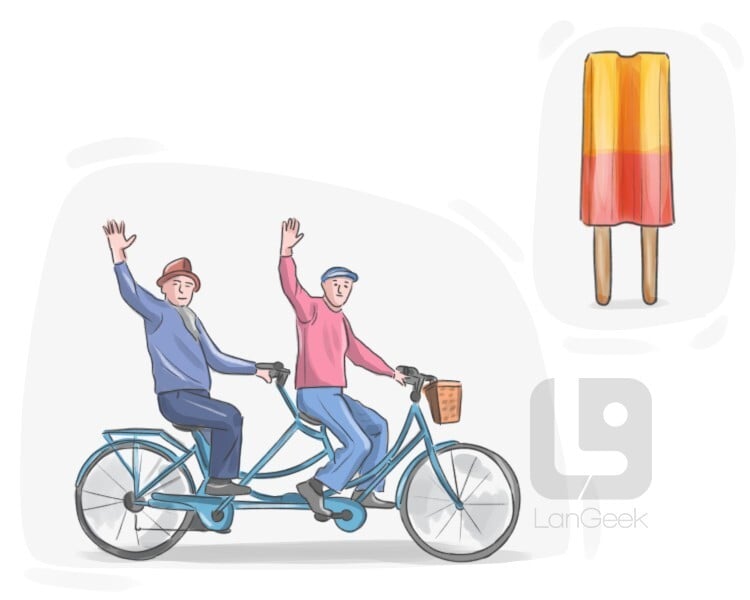
dual
01
doppelt, dual
having or consisting of two aspects, parts, functions, etc.
Grammatische Informationen
morphologische Zusammensetzung
einfach
qualitativ
Superlativ
most dual
Komparativ
more dual
steigerbar
Themenbereich
quantity, structure, function
Beispiele
The job requires a dual skill set, combining both technical expertise and creative thinking.
Die Stelle erfordert ein doppeltes Fähigkeitsset, das sowohl technische Expertise als auch kreatives Denken kombiniert.
02
dual
(grammar) describing words in some languages that specifically indicate the presence of exactly two people or things
Beispiele
In Arabic, the dual form is used to distinguish between two objects or people.
Im Arabischen wird die duale Form verwendet, um zwischen zwei Objekten oder Personen zu unterscheiden.
03
doppelt, mit Doppelsteuerung
(of a flight) involving two people, typically an instructor and a student, in a training aircraft where both have access to controls
Beispiele
She logged her first dual flight with the instructor to practice basic maneuvers.
Sie hat ihren ersten Doppelflug mit dem Fluglehrer aufgezeichnet, um grundlegende Manöver zu üben.
Dual
01
der Dual, die Dualform
the grammatical category in some languages that specifically refers to two items, people, or things, distinct from singular and plural forms
Grammatische Informationen
Belebtheitsstatus
abstrakt
morphologische Zusammensetzung
einfach
zählbar
singular
not gender specific
Pluralform
duals
Beispiele
In Classical Arabic, the dual is used to indicate exactly two of something, different from the singular and plural.
Im klassischen Arabisch wird der Dual verwendet, um genau zwei von etwas zu bezeichnen, anders als Singular und Plural.
LanGeek


