

অনুসন্ধান করুন
অভিধানের ভাষা নির্বাচন করুন





























to appease
01
শান্ত করা, তুষ্ট করা
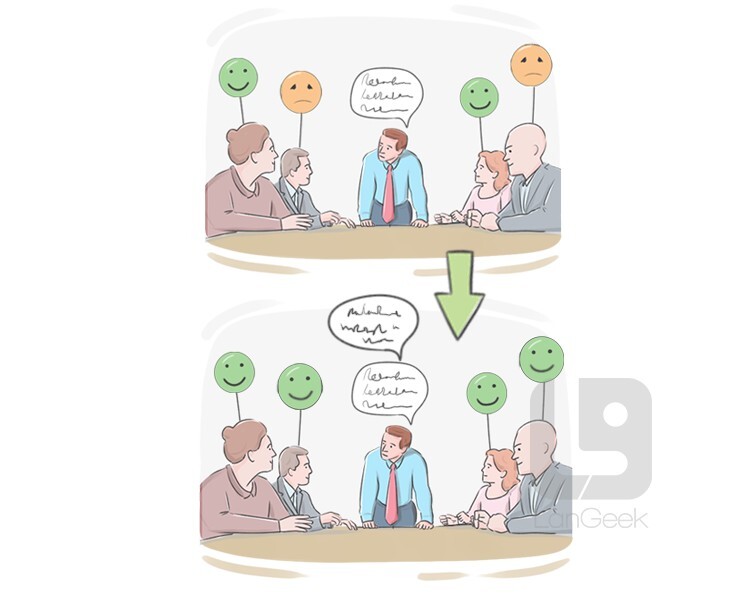
to end or lessen a person's anger by giving in to their demands
Transitive: to appease a negative reaction
ব্যাকরণগত তথ্য
রূপগত গঠন
সরল
কর্মসূচক ক্রিয়া
নিয়মিত
বর্তমান কাল
appease
৩য় পুরুষ একবচন
appeases
বর্তমান কৃদন্ত
appeasing
সরল অতীত
appeased
অতীত কৃদন্ত
appeased
উদাহরণ
The leader's decision to address the issues directly appeased the public's outrage.
নেতার সরাসরি সমস্যাগুলি মোকাবেলা করার সিদ্ধান্ত জনগণের ক্ষোভ শান্ত করেছিল।
02
শান্ত করা, তুষ্ট করা
to calm or satisfy someone by giving in to their demands or desires
Transitive: to appease sb
উদাহরণ
The parent appeased the crying child by giving them a cookie.
পিতা-মাতা কান্নারত শিশুটিকে একটি কুকি দিয়ে শান্ত করলেন।
03
শান্ত করা, তৃপ্ত করা
to calm or lessen the intensity of something, such as pain, hunger, etc.
Transitive: to appease a sensation
উদাহরণ
Drinking a glass of water can appease thirst on a hot day.
এক গ্লাস জল পান করলে গরম দিনে তৃষ্ণা শান্ত হতে পারে।
LanGeek
আমাদের মোবাইল অ্যাপ ডাউনলোড করুন

শব্দতাত্ত্বিক গাছ
appeasable
appeasement
appeaser
appease

