

অনুসন্ধান করুন
অভিধানের ভাষা নির্বাচন করুন





























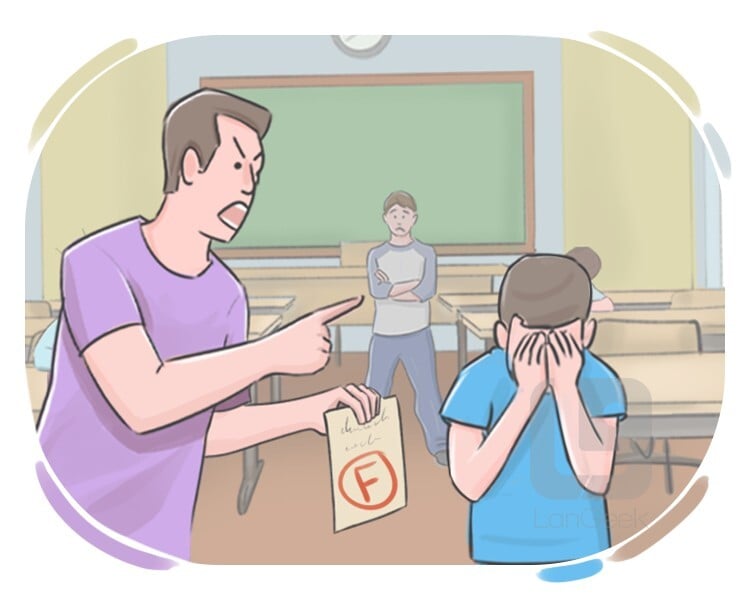
to embarrass
01
লজ্জিত করা, বিভ্রান্ত করা
to make a person feel ashamed, uneasy, or nervous, especially in front of other people
Transitive: to embarrass sb
ব্যাকরণগত তথ্য
রূপগত গঠন
সরল
কর্মসূচক ক্রিয়া
নিয়মিত
বর্তমান কাল
embarrass
৩য় পুরুষ একবচন
embarrasses
বর্তমান কৃদন্ত
embarrassing
সরল অতীত
embarrassed
অতীত কৃদন্ত
embarrassed
উদাহরণ
His clumsy fall embarrassed him in front of his colleagues.
তার অদক্ষ পতন তাকে তার সহকর্মীদের সামনে লজ্জিত করেছিল।
02
বাধা দেওয়া, কঠিন করা
o create obstacles or difficulties that hinder the progress or accomplishment of something
Transitive: to embarrass a process or activity
উদাহরণ
The strict rules embarrassed the team's efforts to adapt quickly to changing conditions.
কঠোর নিয়মগুলি পরিবর্তিত অবস্থার সাথে দ্রুত খাপ খাইয়ে নেওয়ার দলের প্রচেষ্টাকে বাধা দিয়েছে।
LanGeek
আমাদের মোবাইল অ্যাপ ডাউনলোড করুন

শব্দতাত্ত্বিক গাছ
disembarrass
embarrassed
embarrassing
embarrass

