

অনুসন্ধান করুন
অভিধানের ভাষা নির্বাচন করুন





























Sweet pepper
01
মিষ্টি মরিচ, ক্যাপসিকাম
a large hollow fruit, typically red, green, orange or yellow, eaten as a vegetable either raw or cooked
Dialect British
British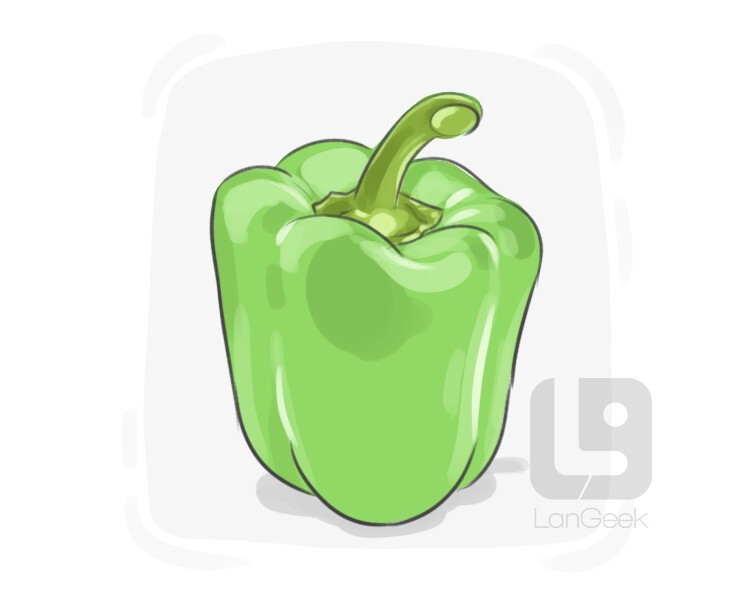
ব্যাকরণগত তথ্য
প্রাণবাচকতার অবস্থা
জড়
রূপগত গঠন
যৌগিক
গণনীয়
singular
not gender specific
বহুবচন রূপ
sweet peppers
উদাহরণ
I enjoy the vibrant colors of sweet peppers in my salad, as they add a visual appeal to the dish.
আমি আমার সালাদে মিষ্টি মরিচ এর প্রাণবন্ত রঙ উপভোগ করি, কারণ তারা থালাটিতে একটি ভিজ্যুয়াল আবেদন যোগ করে।
02
মিষ্টি মরিচ, মরিচ
plant bearing large mild thick-walled usually bell-shaped fruits; the principal salad peppers
DialectBritish
BritishLanGeek


