

অনুসন্ধান করুন
অভিধানের ভাষা নির্বাচন করুন





























Renaissance
01
রেনেসাঁ
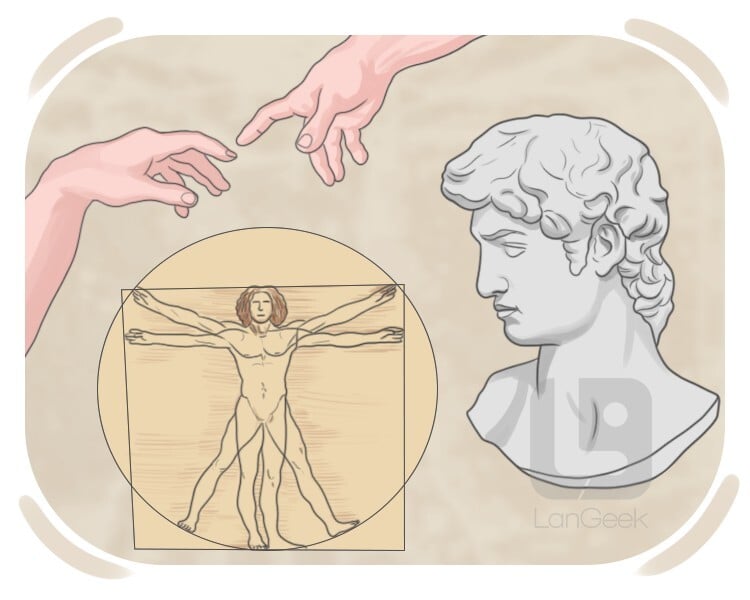
the period between the 14th and 16th centuries in Europe, marked by a rise of interest in Greek and Roman cultures, which is dominant in the art, philosophy, etc. of the times
ব্যাকরণগত তথ্য
প্রাণবাচকতার অবস্থা
বিমূর্ত
রূপগত গঠন
যৌগিক
অগণনীয়
singular
not gender specific
উদাহরণ
The Renaissance period is known for its remarkable achievements in art, science, and literature.
রেনেসাঁ যুগ শিল্প, বিজ্ঞান এবং সাহিত্যে এর উল্লেখযোগ্য অর্জনের জন্য পরিচিত।
02
রেনেসাঁ, সাংস্কৃতিক রেনেসাঁ
a revival or renewed interest in learning, arts, or culture
উদাহরণ
The town experienced a cultural renaissance after the opening of the new theater.
নতুন থিয়েটার খোলার পর শহরটি একটি সাংস্কৃতিক পুনর্জাগরণ অনুভব করেছে।
LanGeek


