

অনুসন্ধান করুন
অভিধানের ভাষা নির্বাচন করুন





























passive
01
কর্মবাচ্য
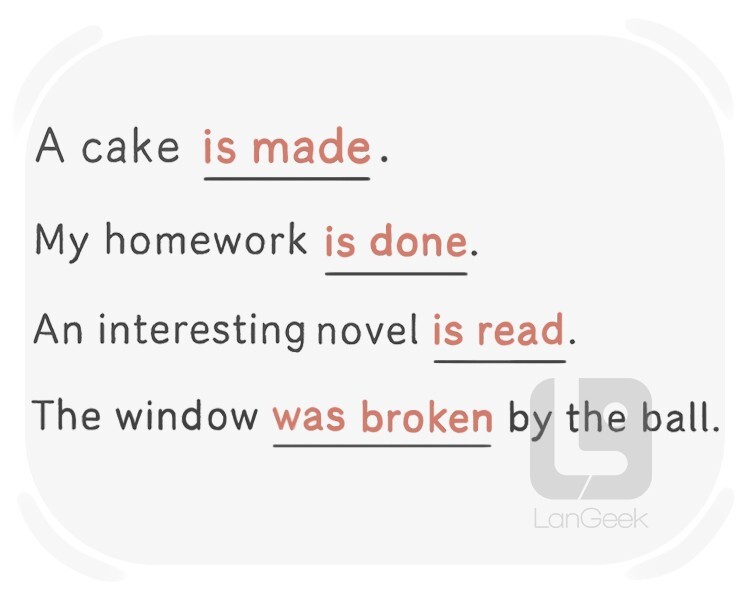
(grammar) describing a verb whose subject is affected by the action of the verb
উদাহরণ
In the passive voice, the object of an action becomes the subject of the sentence.
কর্মবাচ্যে, একটি ক্রিয়ার কর্ম বাক্যের কর্তা হয়ে যায়।
02
প্যাসিভ, বশ্য
accepting what happens or not opposing what other people do or say
ব্যাকরণগত তথ্য
রূপগত গঠন
সরল
গুণবাচক
অতিশয় রূপ
most passive
তুলনামূলক রূপ
more passive
তুলনীয়
বিষয়ক্ষেত্র
behavior, personality, interaction
উদাহরণ
She was being passive during the meeting, allowing others to make all the important decisions.
তিনি সভার সময় নিষ্ক্রিয় ছিলেন, অন্যদের সমস্ত গুরুত্বপূর্ণ সিদ্ধান্ত নিতে দিচ্ছিলেন।
03
নিষ্ক্রিয়, সক্রিয় নয়
(of a circuit or device) not generating energy and lacking an internal source of electromotive force
উদাহরণ
A resistor is a passive component.
একটি রেজিস্টর একটি প্যাসিভ উপাদান।
Passive
ব্যাকরণগত তথ্য
প্রাণবাচকতার অবস্থা
বিমূর্ত
রূপগত গঠন
যৌগিক
অগণনীয়
singular
not gender specific
বহুবচন রূপ
passives
উদাহরণ
"The cake was baked by Mary" is an example of the passive.
"কেকটি মেরি দ্বারা বেক করা হয়েছিল" কর্মবাচ্য এর একটি উদাহরণ।
LanGeek
আমাদের মোবাইল অ্যাপ ডাউনলোড করুন

শব্দতাত্ত্বিক গাছ
impassive
passively
passiveness
passive

