

অনুসন্ধান করুন
অভিধানের ভাষা নির্বাচন করুন





























après
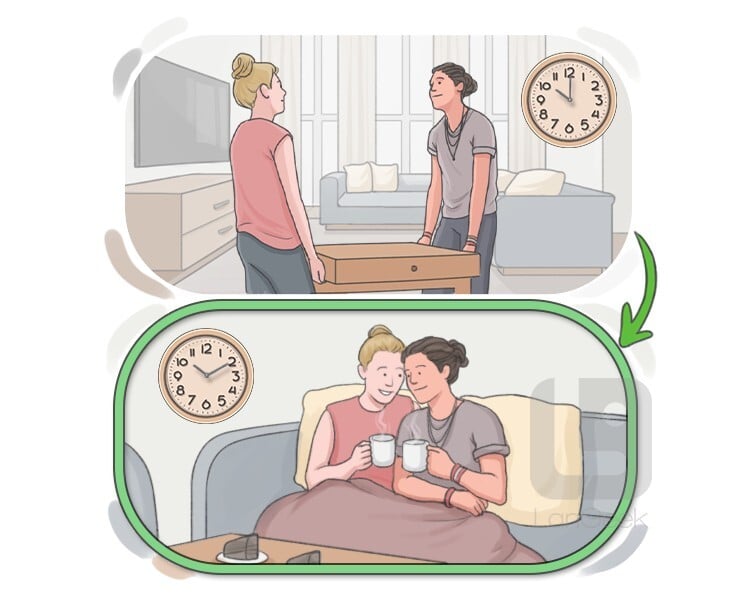
01
পরে
indique ce qui suit dans le temps ou l'ordre
ব্যাকরণগত তথ্য
উদাহরণ
Je me repose après le travail.
আমি কাজের পর বিশ্রাম নিই।
02
পিছনে, এর পিছনে
indique une position dans l'espace, derrière quelque chose ou quelqu'un
উদাহরণ
Le chat court après la souris.
বিড়াল ইঁদুরের পিছনে দৌড়ায়।
après
01
পরে
indique qu'une action ou un événement se produit plus tard, après un autre événement
ব্যাকরণগত তথ্য
অতুলনীয়
উদাহরণ
Nous partirons après.
আমরা পরে চলে যাব।
LanGeek


