






























Compost
01
퇴비, 유기 비료
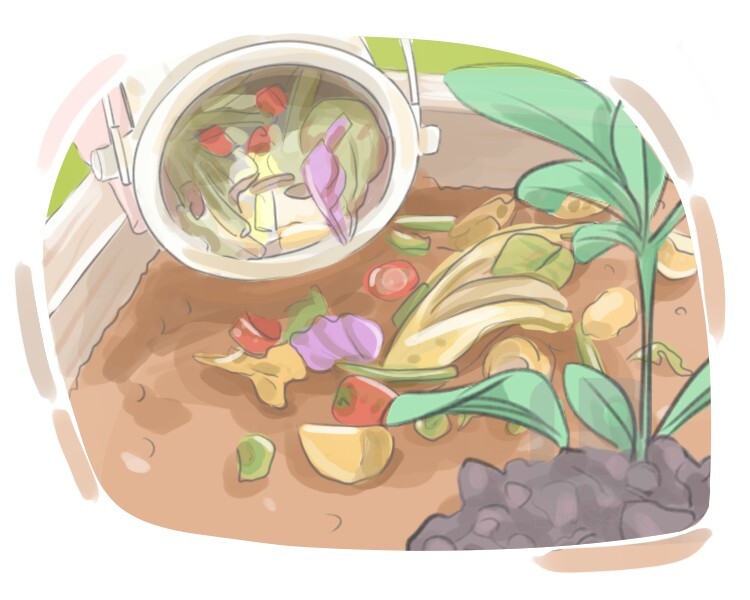
decayed leaves, plants, or other organic waste turned into a mixture that can improve the soil's quality and productivity once added to it
문법 정보
유생성 상태
무생물
형태적 구성
단순어
불가산
singular
not gender specific
복수형
composts
예시들
In early spring, Maria spread a two-inch layer of compost over her raised beds to boost vegetable yields.
이른 봄에, 마리아는 채소 수확량을 높이기 위해 자신의 높은 화단에 2인치 두께의 퇴비 층을 뿌렸다.
to compost
01
퇴비를 만들다, 퇴비화하다
to make decayed leaves, plants, or other organic waste into a mixture that can improve the soil's quality to help plants grow more quickly
Transitive: to compost organic waste
문법 정보
형태적 구성
파생어
동작 동사
규칙
현재 시제
compost
3인칭 단수
composts
현재분사
composting
단순 과거
composted
과거분사
composted
예시들
She composts kitchen scraps and yard waste to create nutrient-rich soil for her garden.
그녀는 부엌에서 나온 찌꺼기와 마당에서 나온 쓰레기를 퇴비화하여 정원을 위한 영양분이 풍부한 토양을 만듭니다.
02
퇴비를 만들다, 퇴비로 풍부하게 하다
to enrich or improve soil by adding compost to it
Transitive: to compost a piece of land
예시들
She composted her garden beds in the spring to prepare for planting.
그녀는 봄에 심기를 준비하기 위해 정원 화단에 퇴비를 넣었습니다.
LanGeek
모바일 앱 다운로드

어휘 나무
compostable
compost

