






























to turn off
01
끄다, 종료하다
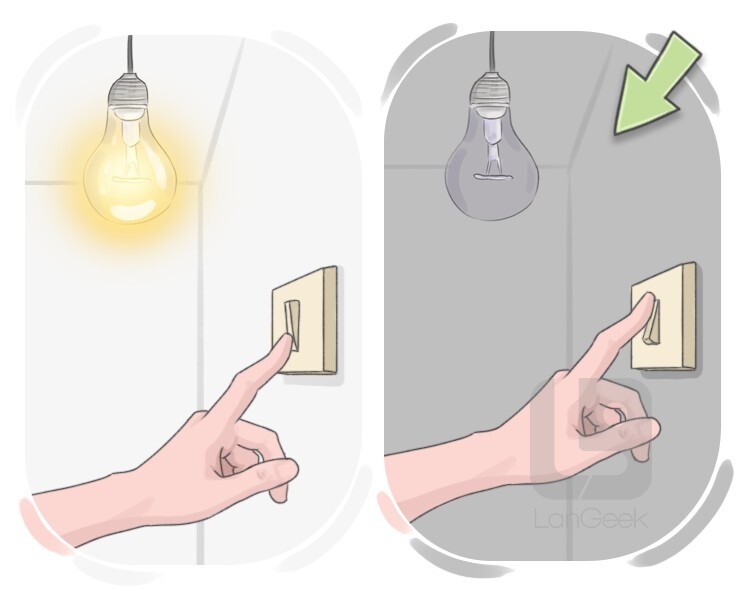
to cause a machine, device, or system to stop working or flowing, usually by pressing a button or turning a switch
Transitive
문법 정보
형태적 구성
구동사
동작 동사
규칙
분리 가능
불변화사
off
기본 동사
turn
현재 시제
turn off
3인칭 단수
turns off
현재분사
turning off
단순 과거
turned off
과거분사
turned off
예시들
Don't forget to turn off the TV when you're finished watching it.
다 보고 나면 TV를 끄는 것을 잊지 마세요.
02
싫증나게 하다, 멀리하게 하다
to make someone strongly dislike something
예시들
The rude behavior of the waiter turned off the customers.
웨이터의 무례한 행동이 고객들을 물러나게 했다.
03
방향을 바꾸다, 돌다
to alter the direction of a vehicle or object
예시들
The car turned off sharply to avoid colliding with the oncoming traffic.
차량은 맞은편 차량과 충돌을 피하기 위해 급격히 방향을 틀었습니다.
Turn off
01
관심을 잃게 하는 것, 불쾌감
a characteristic, behavior, or feature that makes someone lose attraction or interest in a person or situation
속어
문법 정보
유생성 상태
추상
형태적 구성
합성어
가산
singular
not gender specific
복수형
turn-offs
예시들
His arrogance is a huge turn off.
그의 오만함은 큰 흥미를 떨어뜨리는 요소입니다.


