

Rechercher
Sélectionnez la langue du dictionnaire





























to turn off
01
éteindre
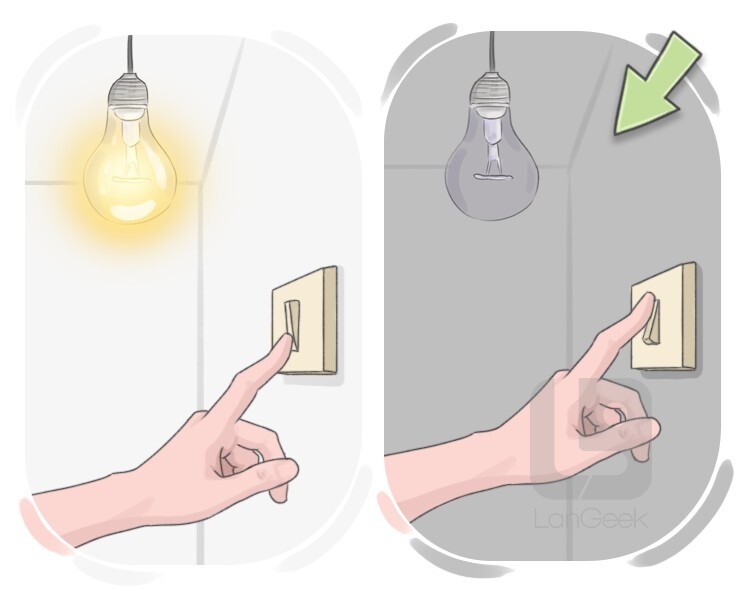
to cause a machine, device, or system to stop working or flowing, usually by pressing a button or turning a switch
Transitive
informations grammaticales
composition morphologique
à particule
verbe d’action
régulier
séparable
particule
off
verbe de base
turn
présent
turn off
3e personne du singulier
turns off
participe présent
turning off
passé simple
turned off
participe passé
turned off
Exemples
Don't forget to turn off the TV when you're finished watching it.
N'oubliez pas d'éteindre la télévision lorsque vous avez fini de la regarder.
02
dégoûter, rebouter
to make someone strongly dislike something
Exemples
The rude behavior of the waiter turned off the customers.
Le comportement grossier du serveur a dégoûté les clients.
03
dévier, virer
to alter the direction of a vehicle or object
Exemples
The car turned off sharply to avoid colliding with the oncoming traffic.
La voiture a tourné brusquement pour éviter de percuter le trafic venant en sens inverse.
Turn off
01
repoussoir, désagrément
a characteristic, behavior, or feature that makes someone lose attraction or interest in a person or situation
argot
informations grammaticales
statut d’animéité
abstrait
composition morphologique
composé
dénombrable
singular
not gender specific
forme plurielle
turn-offs
Exemples
His arrogance is a huge turn off.
Son arrogance est un énorme repoussoir.
LanGeek


