

অনুসন্ধান করুন
অভিধানের ভাষা নির্বাচন করুন





























Tusk
01
দাঁত, হাতির দাঁত
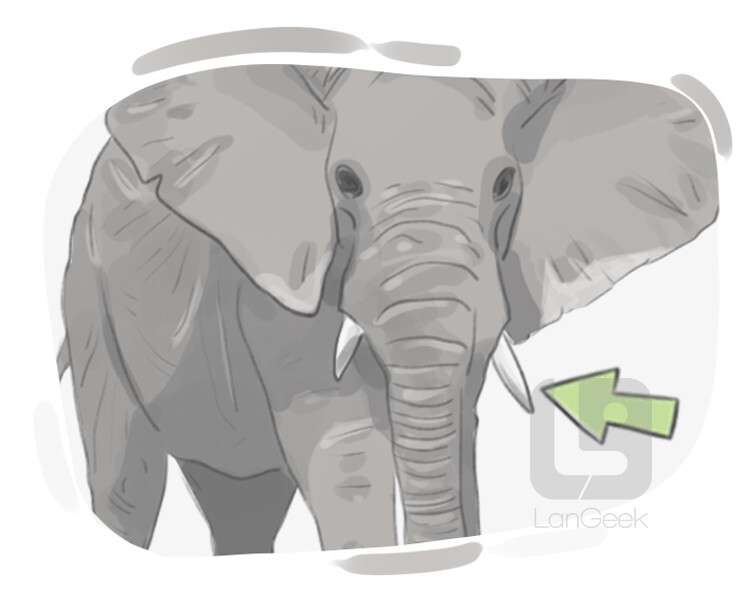
each of the curved pointy teeth of some animals such as elephants, boars, etc., especially one that stands out from the closed mouth
ব্যাকরণগত তথ্য
প্রাণবাচকতার অবস্থা
জড়
রূপগত গঠন
সরল
গণনীয়
singular
not gender specific
বহুবচন রূপ
tusks
উদাহরণ
The elephant displayed its majestic tusks, gleaming in the sunlight as it roamed the savanna.
হাতিটি তার রাজকীয় দাঁত প্রদর্শন করেছিল, সূর্যের আলোয় চকচক করছিল যখন এটি সাভানায় ঘুরে বেড়াচ্ছিল।
02
দাঁত, হাতির দাঁত
the hard, smooth, ivory-colored dentine that forms the main substance of elephant and walrus tusks
উদাহরণ
Ivory is harvested from elephant tusks.
হাতির দাঁত থেকে হাতির দাঁত সংগ্রহ করা হয়।
to tusk
01
দাঁত তুলে ফেলা, হাতির দাঁত অপসারণ
to remove the tusks from an animal, typically for management, trade, or poaching
ব্যাকরণগত তথ্য
রূপগত গঠন
উৎপন্ন
কর্মসূচক ক্রিয়া
নিয়মিত
বর্তমান কাল
tusk
৩য় পুরুষ একবচন
tusks
বর্তমান কৃদন্ত
tusking
সরল অতীত
tusked
অতীত কৃদন্ত
tusked
উদাহরণ
Wildlife authorities tusked the elephants to prevent poaching.
বন্যপ্রাণী কর্তৃপক্ষ শিকারীদের রোধ করতে হাতিদের দাঁত সরিয়েছে।
02
শিং দিয়ে আঘাত করা, দাঁত দিয়ে বিদ্ধ করা
to stab, gore, or pierce with a tusk or horn
উদাহরণ
The bull tusked its rival during the fight.
ষাঁড়টি লড়াইয়ের সময় তার প্রতিদ্বন্দ্বীকে শিং দিয়ে আঘাত করেছিল.
LanGeek


