

অনুসন্ধান করুন
অভিধানের ভাষা নির্বাচন করুন





























Planet
ব্যাকরণগত তথ্য
প্রাণবাচকতার অবস্থা
জড়
রূপগত গঠন
সরল
গণনীয়
singular
not gender specific
বহুবচন রূপ
planets
উদাহরণ
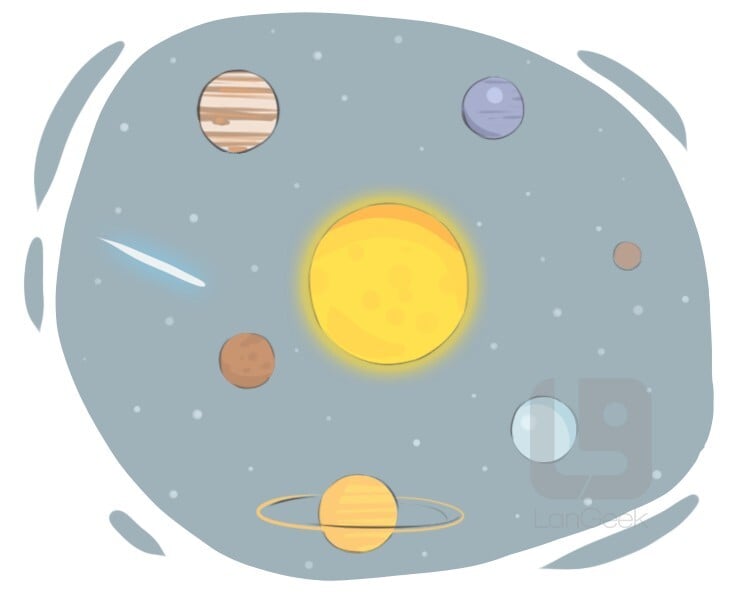
Jupiter is the largest planet in our solar system.
বৃহস্পতি আমাদের সৌরজগতের সবচেয়ে বড় গ্রহ।
02
অনুগামী, সেবক
a person who follows or serves another
03
গ্রহ, আকাশীয় বস্তু
a celestial body orbiting the sun, reflecting light. Includes Mercury to Pluto
04
গ্রহ, গ্লোব
the big round mass covered in land and water, on which people, animals, and plants live
উদাহরণ
The planet is getting warmer because of pollution.
দূষণের কারণে গ্রহ উষ্ণ হয়ে উঠছে।
LanGeek
আমাদের মোবাইল অ্যাপ ডাউনলোড করুন

শব্দতাত্ত্বিক গাছ
planetal
planet

