

অনুসন্ধান করুন
অভিধানের ভাষা নির্বাচন করুন





























to overrun
01
আক্রমন করা, প্লাবিত করা
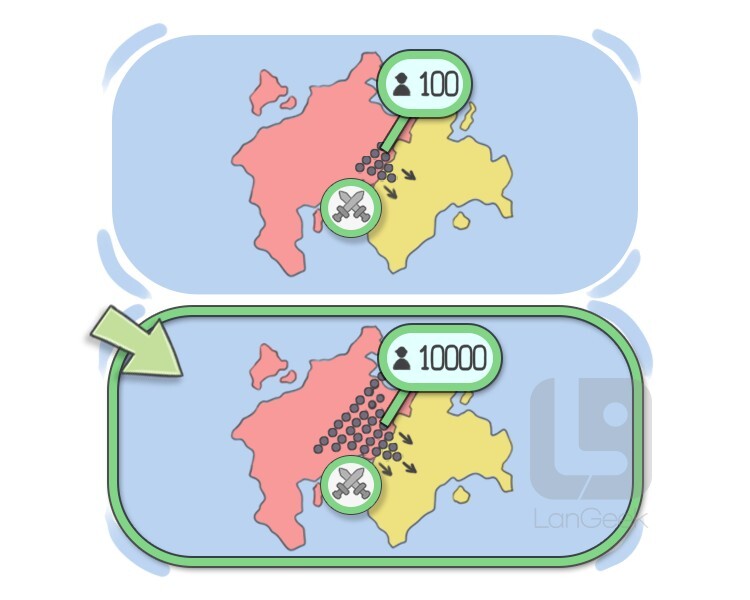
to invade or overwhelm with a large number, surpassing defenses
Transitive: to overrun a place
ব্যাকরণগত তথ্য
রূপগত গঠন
যৌগিক
গতিবাচক ক্রিয়া
নিয়মিত
বর্তমান কাল
overrun
৩য় পুরুষ একবচন
overruns
বর্তমান কৃদন্ত
overrunning
সরল অতীত
overran
অতীত কৃদন্ত
overrun
উদাহরণ
The enemy forces attempted to overrun the border, catching the defenders off guard.
শত্রু বাহিনী সীমান্ত অতিক্রম করার চেষ্টা করেছিল, রক্ষীদের অপ্রস্তুত অবস্থায় পেয়ে।
02
অতিক্রম করা, আক্রমণ করা
to move beyond a boundary or limit, often in an uncontrolled way
Transitive: to overrun an area or limit
উদাহরণ
The vines overran the garden, covering the walls and pathways.
লতা বাগানকে আবৃত করে ফেলেছে, প্রাচীর এবং পথগুলিকে ঢেকে দিয়েছে।
03
আধিপত্য করা, অতিরিক্ত ভরাট করা
to win against and take the place of someone or something
Transitive: to overrun an opponent or their position
উদাহরণ
The soldiers overran the opposing forces, occupying their trenches and outposts.
সৈন্যরা বিরোধী বাহিনীকে পরাজিত করে তাদের খন্দক এবং আউটপোস্ট দখল করে নেয়।
04
উছলিয়ে পড়া, ছাপিয়ে যাওয়া
to spill or flow over the edges or boundaries of something
Transitive: to overrun a limit or brim
উদাহরণ
The river overran its banks, flooding the surrounding fields.
নদী তার তীর অতিক্রম করেছে, পার্শ্ববর্তী ক্ষেতগুলিকে প্লাবিত করেছে।
Overrun
01
অত্যধিক উৎপাদন, আধিক্য
too much production or more than expected
ব্যাকরণগত তথ্য
প্রাণবাচকতার অবস্থা
বিমূর্ত
রূপগত গঠন
যৌগিক
গণনীয়
singular
not gender specific
বহুবচন রূপ
overruns
LanGeek
আমাদের মোবাইল অ্যাপ ডাউনলোড করুন

শব্দতাত্ত্বিক গাছ
overrun
run

