

অনুসন্ধান করুন
অভিধানের ভাষা নির্বাচন করুন





























to outsmart
01
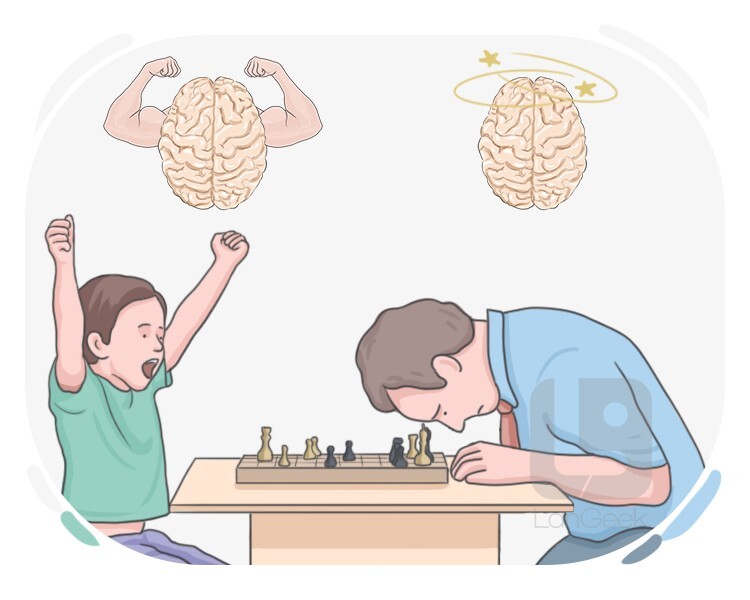
বুদ্ধি দিয়ে পরাস্ত করা, চালাকিতে হারানো
to use skill and cunning to gain an advantage over someone, defeating or surpassing them through intelligence
Transitive: to outsmart sb/sth
অনুমোদনসূচক
অনানুষ্ঠানিক
ব্যাকরণগত তথ্য
রূপগত গঠন
যৌগিক
কর্মসূচক ক্রিয়া
নিয়মিত
বর্তমান কাল
outsmart
৩য় পুরুষ একবচন
outsmarts
বর্তমান কৃদন্ত
outsmarting
সরল অতীত
outsmarted
অতীত কৃদন্ত
outsmarted
উদাহরণ
In the chess match, the young prodigy managed to outsmart his experienced opponent, employing a brilliant strategy to secure victory.
দাবা খেলায়, কিশোর প্রতিভা তার অভিজ্ঞ প্রতিপক্ষকে চালাকিতে হারাতে সক্ষম হয়েছিল, জয় নিশ্চিত করতে একটি উজ্জ্বল কৌশল প্রয়োগ করে।
LanGeek
আমাদের মোবাইল অ্যাপ ডাউনলোড করুন

শব্দতাত্ত্বিক গাছ
outsmart
out
smart

