

Search
Select the dictionary language





























a sweet white or brown substance that is obtained from plants and used to make food and drinks sweet
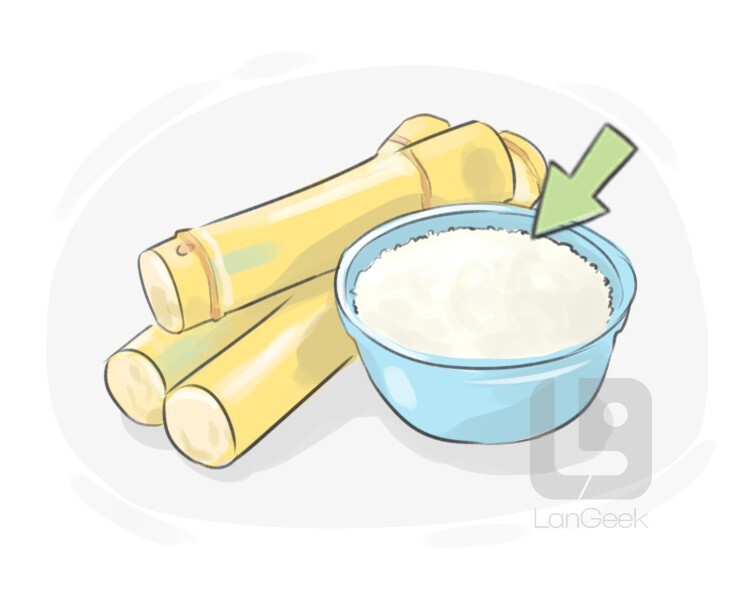
What is "sugar"?
Sugar is a sweet-tasting substance that comes in various forms, such as granulated, powdered, or brown. It is derived from plants, typically sugarcane or sugar beets, and is used to sweeten foods and beverages. Sugar is a simple carbohydrate that provides quick energy to the body. It is commonly used in baking, cooking, and making sweet treats like cookies, cakes, and candies. However, it is essential to consume sugar in moderation as excessive intake can lead to health issues such as obesity and tooth decay.
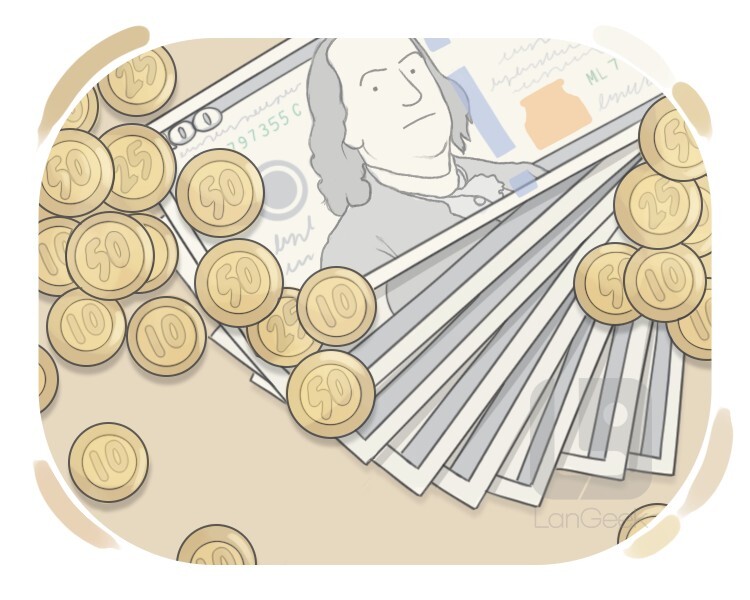
informal terms for money
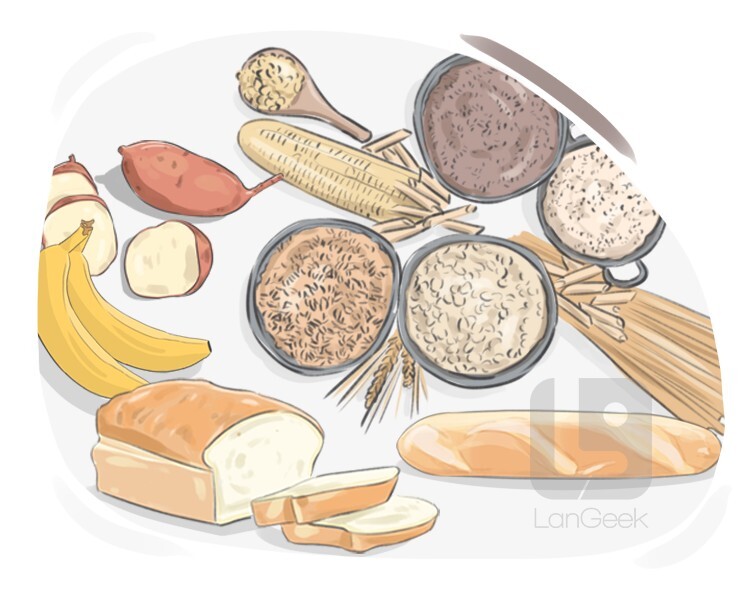
an essential structural component of living cells and source of energy for animals; includes simple sugars with small molecules as well as macromolecular substances; are classified according to the number of monosaccharide groups they contain
affection expressed through kisses or kissing
What does "sugar" mean in an affectionate context?
The word "sugar" originally refers to something sweet in taste, and this idea has long been used metaphorically to describe affection and warmth. In informal language, "sugar" became associated with romantic gestures that feel "sweet." Today, it can refer to affection expressed through kisses or kissing, often used in a playful or endearing way.
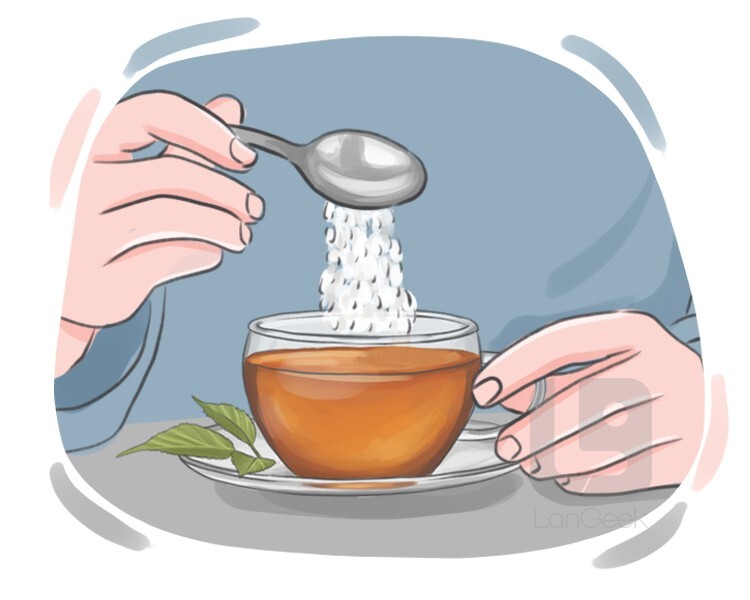
to use sugar or a sweetener, to add a sweet taste to something
used to express annoyance, frustration, or surprise
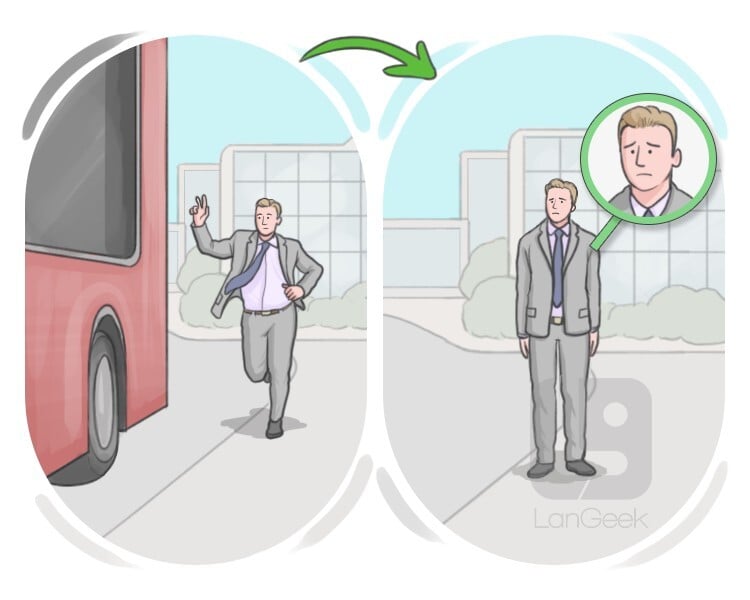
What is the origin of the exclamation "sugar" and how is it used?
Sugar is an exclamation used to express annoyance, frustration, or surprise. It appeared in American English in the 19th–early 20th century as a mild euphemism for "shit", allowing speakers to react strongly without swearing. It was commonly used in everyday conversation, children's speech, and media aimed at general audiences. Today it is inoffensive, polite, and slightly quaint, often conveying irritation or astonishment in a lighthearted, gentle way rather than serious anger.
LanGeek
Download Our Mobile App

Lexical Tree

