

Search
Select the dictionary language





























to react
01
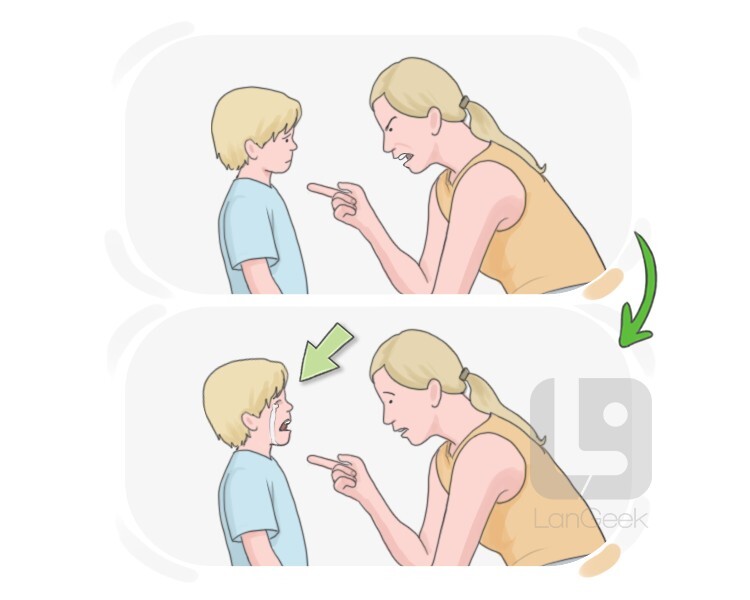
to act or behave in a particular way in response to something
Transitive: to react to sth in a specific manner
Grammatical Information
Composition
Simple
Action verb
Regular
Present tense
react
3rd person singular
reacts
Present participle
reacting
Past simple
reacted
Past participle
reacted
Examples
The political leader had to react promptly to the evolving situation, addressing concerns and making policy adjustments.
02
(physics) to be subject to physical or chemical change
Intransitive: to react | to react with a chemical element
Examples
When sodium reacts with water, it produces sodium hydroxide and hydrogen gas as byproducts.
03
to show a hostile response to an opposing action
Intransitive: to react against an undesirable action or change
Examples
The citizens decided to react against the proposed tax increase by organizing a protest.
04
(physics) to cause a substance to change by interacting with other substances
Transitive: to react a chemical element with another chemical element
Examples
In the experiment, sodium hydroxide will be reacted with hydrochloric acid to form a salt and water.
05
to have an adverse reaction to something particular such as food, smell, etc., particularly one that causes illness
Intransitive: to react | to react to an allergen
Examples
Certain individuals may react negatively to strong perfumes, experiencing headaches or respiratory discomfort.
LanGeek
Download Our Mobile App

Lexical Tree
overreact
reactance
react
act

