

Search
Select the dictionary language





























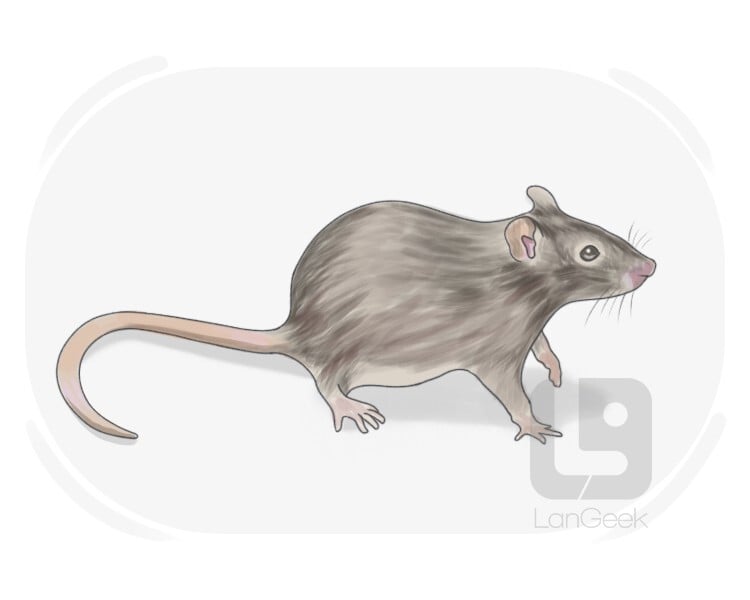
What is a "rat"?
Rats are medium-sized rodents known for their adaptability and widespread distribution. They have pointed snouts, large ears, and long tails. Rats come in various species and colors, and they are found on every continent except Antarctica. Rats are known for their intelligence, agility, and ability to thrive in a wide range of habitats, including urban areas. They are typically omnivorous, feeding on a variety of foods, including grains, fruits, vegetables, and sometimes insects or small animals. Rats are known for their rapid reproduction, and they can reproduce quickly and have large litters. Rats have been both vilified as pests due to their ability to damage crops and spread disease, as well as praised for their contributions to scientific research and as pets in some cultures.
a person considered treacherous, despicable, or contemptible

What is the origin of the term "rat" and how is it used?
"Rat" as an insult dates back several centuries, drawing on the negative reputation of rats as dirty, sneaky, and destructive animals that live among human spaces. By metaphor, it came to describe a person considered treacherous, despicable, or contemptible, emphasizing moral lowliness or unpleasant character rather than specifically informing on others. The term is used in informal speech across English-speaking countries, often in anger or condemnation. It is clearly derogatory but not vulgar, targeting a person's character and behavior rather than being strongly offensive language.
a pad, typically made of hair, worn to add volume to a woman's hairstyle
someone who works or provides replacement workers during a strike
What is the origin of the term "rat" and how is it used?
"Rat" as a labor-related insult dates back to the late 19th century, drawing on the long-standing association of rats with betrayal, treachery, and disloyal behavior. In trade union contexts, it came to describe someone who works during a strike or provides replacement labor, implying they are undermining solidarity and acting selfishly against the group. The term has been used in union rhetoric, picket lines, and political speech, especially in industrial disputes. It is clearly derogatory within labor movements, though its offensiveness depends on one's stance toward strikes and unions.
someone who gives information about other people and their crimes or wrongdoings to the police or authorities
What does "rat" mean in street and prison slang?
It is used to describe someone who gives information about other people and their crimes or wrongdoings to the police or authorities, often considered even worse than a "snitch" in some subcultures. People typically call someone a "rat" as a severe insult, implying disloyalty, cowardice, and worthlessness, with the term carrying an especially heavy stigma in prison culture where rats may face violence. The term originated in early 20th century American criminal slang, drawing from the rat's reputation as a sneaky, untrustworthy creature, and remains common in hip hop lyrics, gang culture, and crime fiction.
to use a hair pad to add volume or fullness to a hairstyle
to abandon or betray one's friends, group, or party for personal gain
to take the place of someone who is on strike, performing their work
to employ strikebreakers to replace striking workers
to hunt or catch rats, often using dogs trained for the purpose
LanGeek
Download Our Mobile App

Lexical Tree

