

Search
Select the dictionary language





























(grammar) a verb that is used with the main verb of a sentence to indicate possibility, intention, etc., such as can, might, should, etc.
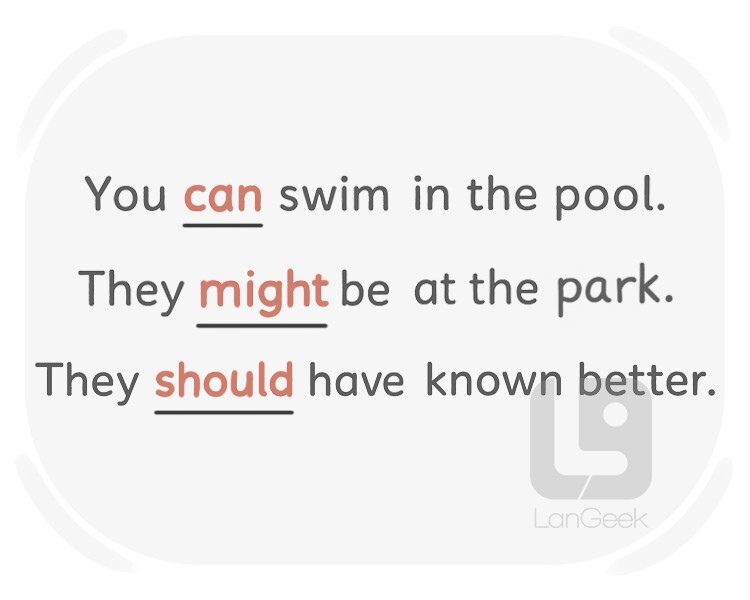
What is a "modal"?
A modal is a type of auxiliary verb used to express necessity, possibility, permission, or ability. Modals help convey the speaker's attitude toward the action of the main verb, indicating whether it is required, allowed, or likely to happen. Common modal verbs in English include "can," "could," "may," "might," "must," "shall," "should," "will," and "would." For example, in the sentence "You must study for the exam," the word "must" expresses necessity. Modals are essential for providing additional meaning and context in sentences, helping to clarify the speaker's intentions and the nature of actions.
pertaining to or representing the most frequently occurring value in a statistical distribution
relating to the grammatical mood of verbs, expressing modality such as necessity, possibility, or obligation
pertaining to a musical mode, especially in ecclesiastical compositions
LanGeek


