
to clean up
[phrase form: clean]
01
청소하다, 정리하다
to make oneself neat or clean
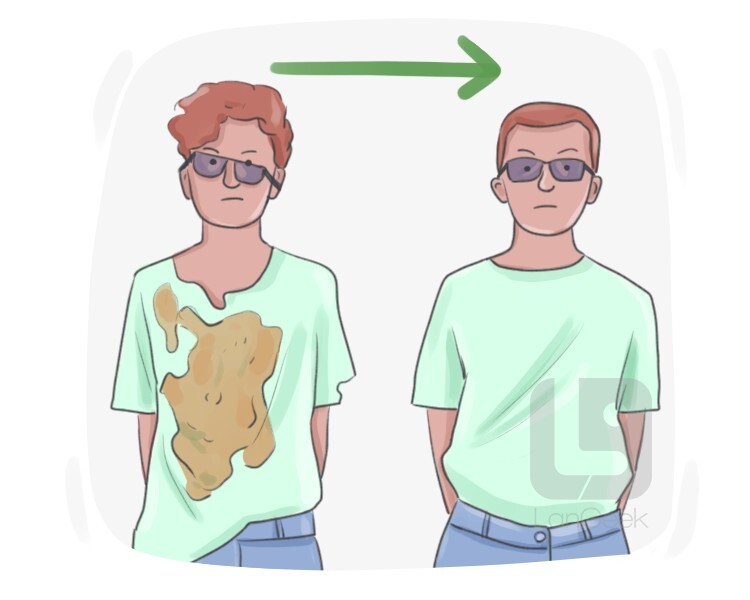

예시들
The environmental activists are urging residents to help clean up local parks and green spaces.
환경 운동가들은 주민들에게 지역 공원과 녹지 공간을 청소하는 것을 도와달라고 촉구하고 있습니다.
02
청소하다, 정리하다
to put things or places in order, often by tidying
예시들
The volunteers joined forces to clean up the park, picking up litter and restoring its cleanliness.
자원봉사자들은 공원을 청소하기 위해 힘을 모아 쓰레기를 주우며 청결을 회복했습니다.
03
청소하다, 제거하다
to get rid of something, typically in a proper and organized manner
예시들
The city organized a community event to clean up the neighborhood by collecting and properly disposing of unwanted items.
도시는 원하지 않는 물건을 수거하고 적절히 처리하여 지역 사회를 청소하기 위한 커뮤니티 행사를 조직했습니다.
04
상당한 재정적 이익을 창출하다, 큰 이익을 얻다
to generate substantial financial gains, often exceeding expectations or previous performance
예시들
The real estate developer cleaned up by buying properties at a low price and selling them for a substantial profit.
부동산 개발자는 저가에 부동산을 구입하고 상당한 이익을 내어 팔아 큰 돈을 벌었다.