






























Syntax
01
構文, 文法構造
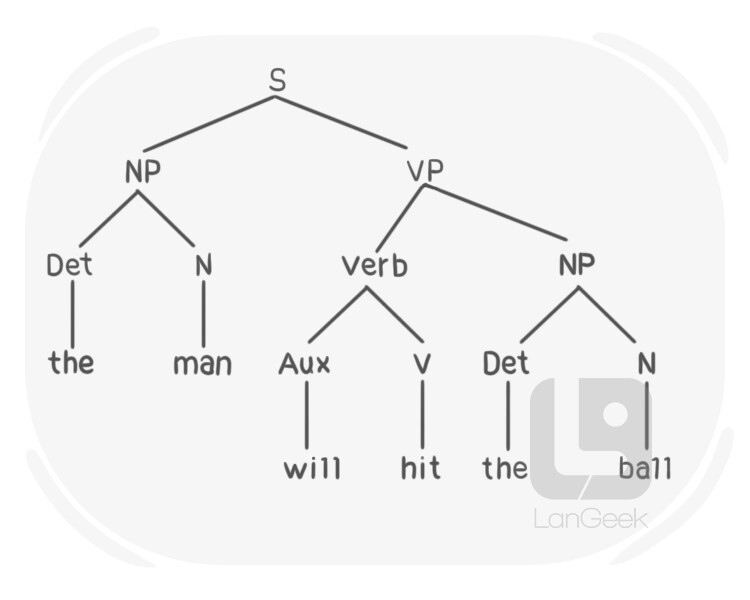
(linguistics) the way in which words and phrases are arranged to form grammatical sentences in a language
文法情報
有生性の状態
抽象的
形態的構成
単純語
不可算
singular
not gender specific
例
In linguistics, syntax refers to the rules that govern the structure of sentences, determining how words are arranged to convey meaning.
言語学において、統語論は、意味を伝えるために単語がどのように配置されるかを決定し、文の構造を支配する規則を指します。
02
構文, 構文構造
an organized system or set of rules that specifies how elements should be arranged in a language or other structure
例
Generative syntax provides a framework for analyzing sentence structure.
統語論の生成文法は、文の構造を分析するための枠組みを提供します。
03
統語論, 統語論
the branch of linguistics that studies how words and phrases are structured and organized into sentences
例
She decided to specialize in syntax for her PhD.
彼女は博士号のために統語論に特化することに決めました。
04
構文, 構文構造
the set of rules that defines how statements and commands must be written in a computer programming language
例
A missing semicolon can cause a syntax error.
欠落したセミコロンは構文エラーを引き起こす可能性があります。
LanGeek
モバイルアプリをダウンロード

語彙ツリー
syntactic
syntax

