

Search
Select the dictionary language






























a grammatical construction in which two negative elements are used within the same sentence, often resulting in a positive meaning
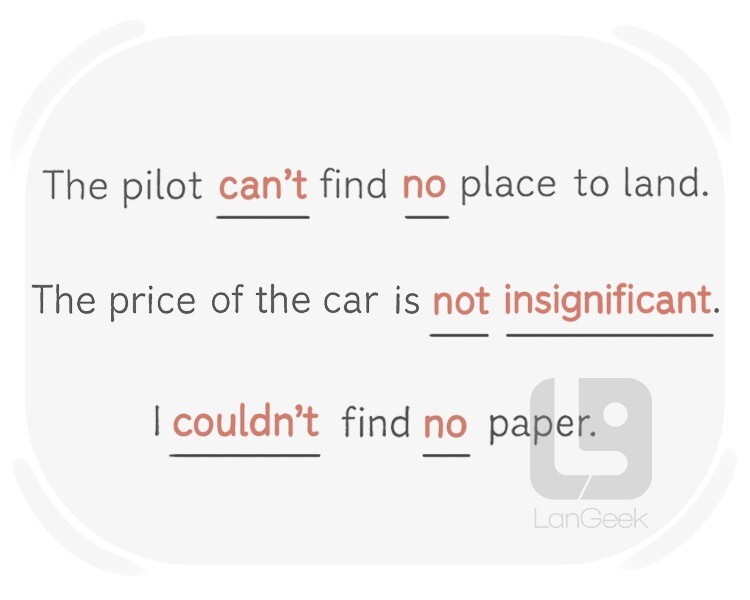
What is a "double negative"?
A double negative is a linguistic construction in which two negative words or elements are used in the same clause or sentence, often resulting in a meaning that can be confusing or lead to ambiguity. In standard English, using a double negative typically produces a positive meaning, although this is not the case in all languages or dialects. For example, in the sentence "I do not want no cake," the two negatives "do not" and "no" combine to imply that the speaker does want cake, contrary to the intended meaning. In informal speech and some dialects, double negatives can be used for emphasis, but in formal writing and standard English, they are generally considered incorrect and should be avoided to ensure clarity. Understanding double negatives is important for effective communication and for recognizing variations in language use.
LanGeek


