

Search
Select the dictionary language





























(phonetics) a speech sound produced by interfering with or stopping the flow of air through the mouth or nose
What is a "consonant"?
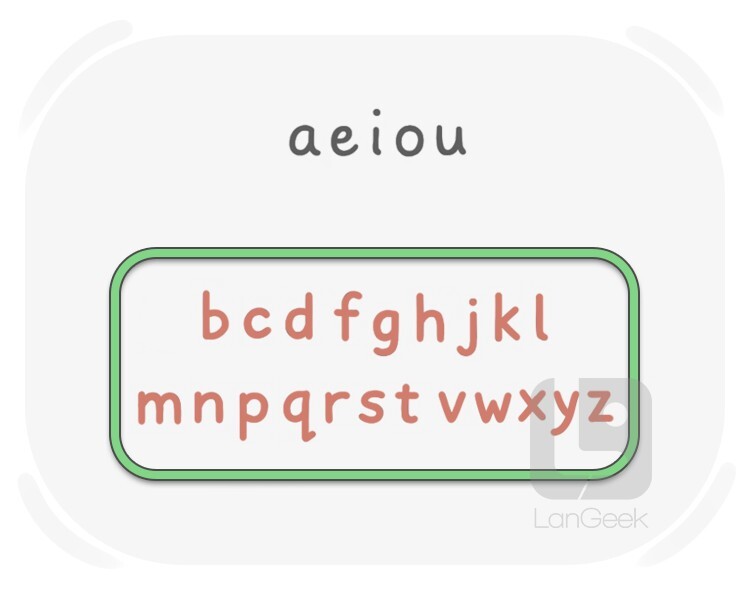
A consonant is a speech sound produced when airflow is partially or completely blocked in the vocal tract. Unlike vowels, which are produced with an open vocal tract, consonants involve some form of closure or narrowing, creating distinct sounds. In the English alphabet, consonants include letters such as "b," "c," "d," "f," "g," "h," and so on. Consonants can be classified based on their place and manner of articulation, such as stops, fricatives, and nasals. Understanding consonants is essential for phonetics, spelling, and pronunciation in language.
a letter of the alphabet representing a spoken consonant
involving or displaying harmony, balance, or agreement
having a harmonious and pleasing sound, typically involving notes or chords that blend well together
LanGeek
Download Our Mobile App

Lexical Tree

